
miso paste meaning If you have ever picked up a Japanese recipe and seen the words “miso paste meaning,” you may have wondered what it actually is. Is it a sauce? A seasoning? Something like peanut butter? And why does such a small amount seem to add so much flavor?
The simple miso paste meaning is this: miso is a thick, fermented paste traditionally made from soybeans, salt, and koji, often with rice or barley. It is widely used in Japanese cooking to add a deep, salty, savory flavor to soups, sauces, marinades, dressings, and many other dishes miso paste meaning.
I first found miso a little confusing because different tubs looked almost identical on the supermarket shelf, while their colors ranged from pale cream to dark brown. Once I started using it regularly, though, it became one of those ingredients that was easy to keep in the refrigerator and surprisingly useful miso paste meaning.
Here is what you need to know before buying or cooking with it.
What Does Miso Paste Mean?
“Miso” refers to a traditional Japanese fermented food. miso paste meaning is the finished thick paste used as a cooking ingredient.
The basic process involves fermenting ingredients with koji, a culture commonly made using Aspergillus oryzae. Soybeans are common, but some varieties use rice, barley, or other grains.
The result is a concentrated paste with a strong savory taste.
Unlike a typical table sauce, you generally don’t need much miso. A spoonful can change the flavor of an entire bowl of soup or a pot of noodles.
Miso is usually kept refrigerated after opening. Because it is fermented and quite salty, a container can last for a reasonable amount of time when stored properly according to the package instructions.
What Does Miso Paste Taste Like?
This is probably the most useful thing to understand if you’ve never tried it.
Miso has a savory, salty, fermented and slightly earthy flavor. The Japanese word umami is often used when describing its taste. Depending on the variety, it can also have sweet, nutty, fruity, or deeply roasted notes.
The flavor can be surprisingly strong if you taste a spoonful directly.
I made that mistake when I first bought it. I expected something mild and spreadable, tasted it straight from the container, and thought, “That’s much saltier than I expected.”
But mixed into a soup or sauce, it behaves differently. Instead of tasting like a spoonful of fermented soybean paste, it blends into the other ingredients and gives the dish more depth.
Think of it as a concentrated flavor booster rather than something you normally eat by the spoonful.
What Is Miso Made From?
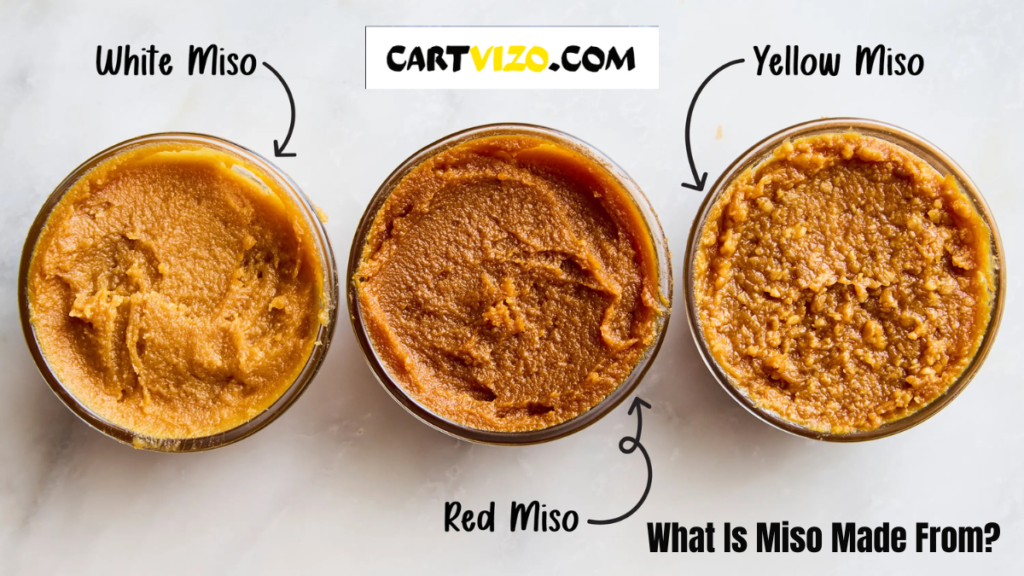
Traditional miso commonly contains three main components:
- Soybeans
- Salt
- Koji
Other ingredients can be added depending on the type. Rice and barley are especially common.
Koji is important because it helps break down the ingredients during fermentation. This process creates the complex flavors associated with miso.
Not every miso tastes the same, either. The ingredients, fermentation time, salt level, and production method can all affect the final flavor.
That is why two tubs labeled “miso” can taste noticeably different.
The Main Types of Miso
You don’t need to memorize every variety to start cooking, but knowing the common types makes shopping much easier.
White Miso
White miso, often called shiro miso, is usually pale in color and has a relatively mild, slightly sweet flavor.
It is a good choice if you’re new to miso because it is easier to work into everyday recipes without overpowering everything else.
I particularly like it in salad dressings and quick sauces because it adds savory flavor without making the dish taste extremely salty or heavy.
Yellow Miso
Yellow miso sits somewhere between lighter and darker varieties. It can have a balanced savory flavor and works well in soups, sauces, and marinades.
If a recipe simply says “miso paste meaning” without specifying a variety, yellow or white miso can often be a practical starting point, although the final flavor will vary.
Red Miso
Red miso, or aka miso, is generally darker and stronger tasting.
It can have a deeper, saltier, more pronounced fermented flavor. I find it particularly useful when cooking dishes where I want the miso flavor to stand out.
Because it is stronger, I usually start with less and add more if necessary.
Awase Miso
Awase miso is commonly a blend of different types, such as white and red miso.
It can be a convenient everyday option because it provides a middle ground between mild and bold flavors.
Is miso paste meaning the Same as Soy Sauce?
No, although both can contribute salty, savory flavor.
Soy sauce is a liquid seasoning, while miso is a thick paste.
They also behave differently when cooking. Soy sauce is easy to pour into a stir-fry or noodle dish. Miso needs to be mixed or dissolved before it spreads evenly through a liquid or sauce.
I sometimes use both in the same recipe, but I don’t treat them as direct substitutes.
For example, adding a spoonful of miso to vegetable soup can make it taste fuller and more rounded. Adding soy sauce mainly increases the salty, savory liquid seasoning.
How to Use miso paste meaning
The good news is that you don’t need complicated Japanese cooking equipment to use miso.
A saucepan, mixing bowl, spoon, whisk, and refrigerator are enough for most simple recipes.
1. Make Quick Miso Soup
The most obvious use is miso soup.
A simple method is:
- Heat water or broth in a saucepan.
- Add ingredients such as tofu, mushrooms, seaweed, or sliced spring onions.
- Cook until the ingredients are ready.
- Reduce the heat.
- Put a small amount of miso paste meaning into a separate bowl.
- Add some hot broth to the bowl and stir until the miso becomes smooth.
- Pour the mixture back into the saucepan.
- Taste before adding any additional salt.
The important part is not to simply drop a large lump of miso into the pot and expect it to dissolve evenly. Mixing it first with warm broth makes the texture much smoother.
I also avoid aggressively boiling the soup after adding the miso. Gentle heating makes it easier to control the flavor and texture.
2. Add It to Noodles
Miso is excellent in quick noodle meals.
For a simple sauce, mix:
- 1 tablespoon miso
- A little warm water or broth
- A small amount of sesame oil
- Grated garlic or ginger
- A splash of soy sauce if needed
Mix everything until smooth and toss it with cooked noodles.
You can add vegetables, tofu, chicken, mushrooms, or a fried egg depending on what you have available.
This is one of my favorite ways to use leftover vegetables because the miso sauce makes a random collection of ingredients taste like an intentional meal.
3. Make a Miso Dressing
Miso also works well in salad dressing.
Try mixing miso with rice vinegar, a little sesame oil, water, and a small amount of honey or another sweetener.
Taste it before adding more salt. Miso and other salty ingredients can quickly push a dressing from “flavorful” to “too salty.”
This dressing works with cabbage, carrots, cucumber, leafy greens, roasted vegetables, and grain bowls.
4. Use Miso in Marinades
Miso can be combined with ingredients such as ginger, garlic, rice vinegar, sesame oil, or a little sweetness to create a flavorful marinade.
It works especially well with tofu, mushrooms, fish, chicken, and vegetables.
One mistake I made was applying a very thick layer of miso marinade without considering the saltiness. The outside became much too salty before the rest of the food had developed much flavor.
A thinner coating is usually easier to control.
Can You Eat miso paste meaning Raw?
Miso is a ready-to-eat fermented food, so it can be used without cooking.
For example, it can be mixed into a cold dressing or spread into a sauce.
However, if you’re following a particular recipe or have food-safety concerns, follow the storage and handling instructions on the product label.
It’s also worth checking the ingredient list if you have allergies or dietary restrictions. Some miso products may contain ingredients such as barley or other grains.
Does miso paste meaning Need to Be Refrigerated?
Most miso paste meaning should be refrigerated after opening, but always check the manufacturer’s instructions on your particular container.
Use a clean spoon when taking miso from the tub and close the container properly after use.
Because miso has a long usable life compared with many fresh ingredients, it can be convenient for people who cook at home but don’t want to buy a new ingredient every week.
Still, don’t assume that fermentation means a product can be stored carelessly. If the package gives specific storage instructions, follow them.
What Can You Substitute for miso paste meaning?
Sometimes you start cooking, open the refrigerator, and realize the miso container is empty.
There isn’t a perfect one-for-one replacement because miso has a distinctive fermented flavor.
Depending on the recipe, you might use:
- Soy sauce for salt and savory flavor
- Tahini plus soy sauce for a thicker sauce
- Soybean-based fermented products with similar savory qualities
- Nutritional yeast for some savory applications
The best substitute depends heavily on the recipe.
For example, soy sauce may work reasonably well in a noodle sauce, but it won’t perfectly reproduce the thick texture or fermented character of miso soup.
If a recipe calls for a small amount of miso, I prefer to taste the dish and adjust gradually rather than trying to recreate the exact measurement with another ingredient.
Common Miso Mistakes
Miso is easy to use, but a few small mistakes can make a big difference.
Adding Too Much
This is probably the most common beginner mistake.
Miso is concentrated. Start with a modest amount, taste, and add more if necessary.
It is much easier to increase the amount than to rescue a dish that has become extremely salty.
Treating Every Miso as the Same
White miso and red miso don’t necessarily produce the same result.
If a recipe recommends white miso and you use a very strong red miso, the final dish may taste considerably more intense.
Not Dissolving It Properly
Large pieces of miso can remain in soup or sauce if you don’t mix them properly.
The simple solution is to put the miso in a bowl, add some warm liquid, and stir until smooth before incorporating it into the dish.
Adding Salt Too Early
This is an easy mistake because miso itself contains salt.
If you’re making soup, noodles, or a sauce, add the miso first, taste the finished mixture, and only then decide whether it needs more salt or soy sauce.
Buying a Large Container Before Trying It
If you’ve never tasted miso, there is no need to buy the biggest container available.
A smaller tub lets you figure out which type you actually enjoy.
Once you start using it in soups, dressings, marinades, and sauces, you’ll have a better idea of how quickly you go through it.
How to Store miso paste meaning
After opening, keep miso according to the storage instructions on its packaging. Refrigeration is commonly recommended.
Use clean utensils to prevent unwanted contamination, and keep the container tightly closed.
If you notice anything unusual about the product—such as unexpected mold, a strange odor, or a significant change in appearance—don’t simply assume that fermentation is responsible. Check the manufacturer’s guidance and, when in doubt, discard it.
Is miso paste meaning Vegetarian?
Many miso paste meaning are made from plant-based ingredients, but you should check the label if you’re vegetarian or vegan.
The miso itself may be plant-based while a particular prepared product or recipe containing miso may include animal-derived ingredients.
The same rule applies to gluten. Some miso varieties use barley, so people avoiding gluten should check the ingredients and labeling rather than assuming every miso is gluten-free.
Where Can You Buy miso paste meaning?
Miso is increasingly easy to find outside Japan.
You can often find it in:
- Japanese grocery stores
- Asian supermarkets
- Larger supermarkets
- Natural food stores
- Online grocery stores
In a physical store, look in the refrigerated section or the international/Asian foods section, depending on how the store is organized.
When shopping online, check the ingredient list, size, storage instructions, and type of miso rather than choosing based only on the product photo.
A Simple Way to Start Using Miso
If you’re completely new to miso, don’t start with an elaborate recipe requiring fifteen ingredients.
Buy a small container of white or blended miso and try three simple experiments.
First, make a basic miso soup.
Second, mix a teaspoon or two into a homemade salad dressing.
Third, make a quick noodle sauce with miso, warm water, sesame oil, garlic, and a little vinegar.
These three uses will quickly show you how versatile it is.
You’ll also learn something important: miso isn’t supposed to dominate every dish. In many recipes, the best result comes when it quietly makes everything else taste richer.
Final Thoughts on Miso Paste Meaning
So, what does miso paste meaning in practical terms?
It is a thick, fermented seasoning traditionally made from ingredients such as soybeans, salt, and koji. It has a savory, salty, complex flavor and is used in everything from classic miso soup to noodles, dressings, marinades, and vegetable dishes miso paste meaning.
The easiest way to understand miso isn’t by memorizing a definition. Buy a small container, use a little in a simple meal, and taste the difference miso paste meaning.
Start with less than you think you need, remember that different types have different strengths, and let the other ingredients remain part of the dish miso paste meaning.
Once you get comfortable with it, that little tub in the refrigerator can become one of the most useful ingredients you have for turning a plain bowl of noodles, vegetables, or soup into something much more satisfying miso paste meaning.
Next Read: startup booted financial modeling