
Introduction
Artificial intelligence has rapidly evolved from a futuristic concept into a practical tool that influences everyday life. Among the most groundbreaking innovations is ChatGPT, an advanced language model designed to simulate human conversation. Built on natural language processing (NLP) and machine learning, ChatGPT has become a cornerstone of digital communication, offering businesses, educators, and individuals a way to streamline tasks and enhance creativity.
ChatGPT is more than just a chatbot—it represents a paradigm shift in how humans interact with machines. By generating human‑like responses, it bridges the gap between technology and natural conversation. Whether it’s writing blog posts, answering customer queries, or assisting with coding, ChatGPT demonstrates the immense potential of AI in reshaping communication.
Understanding ChatGPT
ChatGPT was developed using deep learning techniques, specifically transformer architecture, which allows it to process vast amounts of text data and generate coherent responses. Unlike traditional chatbots that rely on scripted answers, ChatGPT adapts dynamically, making conversations feel authentic and engaging.
Its training involves billions of words from books, articles, and online sources, enabling it to understand context, tone, and nuance. This makes ChatGPT versatile—it can explain complex topics, draft professional emails, or even create poetry. The model’s ability to predict the next word in a sentence allows it to generate fluid and natural dialogue.
Compared to earlier AI systems, ChatGPT stands out for its adaptability. It doesn’t just provide information; it can brainstorm ideas, role‑play scenarios, and assist in problem‑solving. This flexibility has made it a preferred tool across industries, from marketing to education.
Applications of ChatGPT
One of the most significant strengths of ChatGPT lies in its wide range of applications. For content creators, it serves as a powerful assistant, helping draft articles, social media captions, and marketing copy. Bloggers and businesses use it to maintain consistency and save time while producing high‑quality content.
In customer service, ChatGPT powers intelligent chatbots that provide instant support. Unlike rigid automated systems, it can handle nuanced queries, improving customer satisfaction and reducing workload for human agents.
Education has also benefited from ChatGPT’s capabilities. Students use it for explanations, summaries, and practice questions, while teachers employ it to design lesson plans and interactive learning materials. Similarly, programmers leverage ChatGPT to debug code, generate snippets, and accelerate development.
Businesses integrate ChatGPT into workflows to automate repetitive tasks such as drafting reports, creating presentations, or brainstorming strategies. Its adaptability ensures that it can be customized to meet specific organizational needs.
Benefits of Using ChatGPT
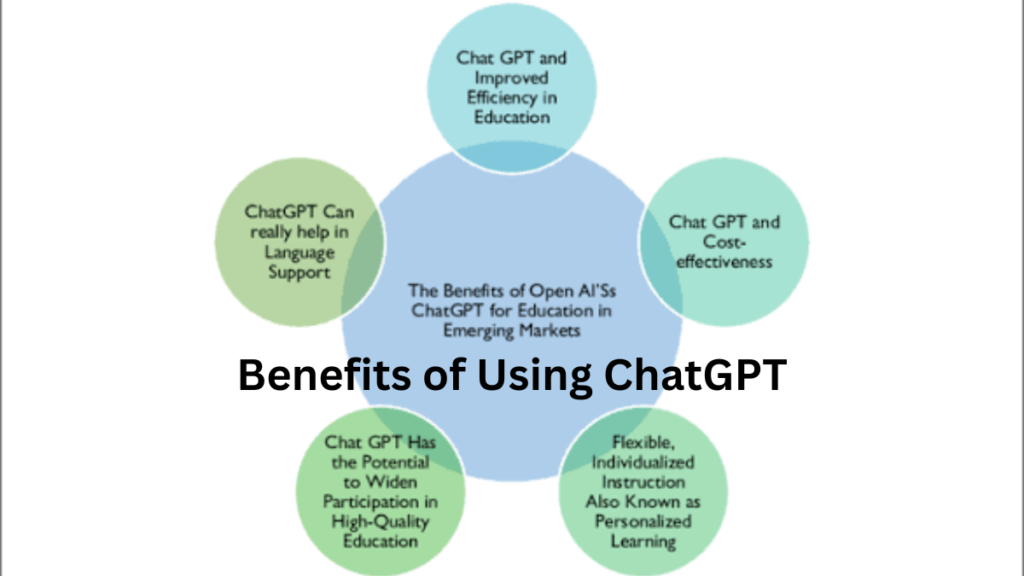
The most obvious benefit of ChatGPT is efficiency. Tasks that once required hours of effort can now be completed in minutes. This time‑saving aspect allows professionals to focus on higher‑value activities.
Creativity is another area where ChatGPT excels. By offering fresh perspectives and generating ideas, it helps writers overcome creative blocks and marketers develop innovative campaigns. Its ability to simulate brainstorming sessions makes it a valuable partner in ideation.
Accessibility is equally important. ChatGPT requires no technical expertise, making advanced AI tools available to anyone with an internet connection. This democratization of technology empowers individuals and small businesses to compete with larger organizations.
Cost‑effectiveness further enhances its appeal. Instead of hiring large teams for repetitive tasks, companies can rely on ChatGPT to handle them efficiently. Its scalability ensures that it can serve startups and enterprises alike, adapting to different workloads without compromising quality.
Limitations and Challenges
Despite its strengths, ChatGPT is not without limitations. Accuracy remains a concern, as the model may occasionally generate incorrect or outdated information. This highlights the need for human oversight when using AI for critical tasks.
Ethical issues also arise. Since ChatGPT learns from vast datasets, it may inadvertently reproduce biases present in the training material. Ensuring fairness and neutrality in AI responses is an ongoing challenge.
Privacy is another consideration. Businesses must be cautious about sharing sensitive data with AI systems, as improper handling could lead to security risks. Responsible usage and compliance with data protection regulations are essential.
Finally, overreliance on ChatGPT can diminish human judgment. While AI is a powerful tool, it should complement rather than replace human expertise. Striking the right balance between automation and human input is crucial for sustainable adoption.
Future of ChatGPT and AI
The future of ChatGPT promises even greater advancements. As natural language processing evolves, future versions will become more accurate, context‑aware, and emotionally intelligent. This will enable deeper, more meaningful interactions between humans and machines.
Integration with other technologies is another exciting prospect. ChatGPT could be combined with search engines, productivity apps, or even smart devices, creating seamless digital ecosystems. Imagine an AI assistant that not only answers questions but also manages schedules, controls home devices, and provides real‑time insights.
Industries will continue to transform as AI adoption grows. While some jobs may be automated, new opportunities will emerge in AI management, ethics, and innovation. The challenge lies in preparing the workforce for this shift.
Looking ahead, ChatGPT symbolizes the dawn of a new era in communication. Its evolution will shape how humans interact with technology, making conversations with machines as natural as those with people.
Conclusion
ChatGPT has revolutionized communication by blending human‑like dialogue with advanced AI capabilities. Its applications span content creation, customer service, education, and business productivity, offering efficiency, creativity, and accessibility. However, challenges such as accuracy, ethics, and privacy remind us that responsible usage is essential.
As AI continues to evolve, ChatGPT will play a central role in shaping the future of digital interaction. By embracing its potential while acknowledging its limitations, individuals and organizations can harness this technology to enhance communication and innovation.
FAQs
What is ChatGPT used for?
ChatGPT is used for content creation, customer support, education, programming, and business automation.
Is ChatGPT free to use?
A free version is available, but premium plans offer advanced features and faster responses.
Can ChatGPT replace human writers?
It can assist writers but cannot fully replace human creativity and judgment.
How accurate is ChatGPT’s information?
ChatGPT provides reliable responses but may occasionally produce errors, requiring human verification.
Is ChatGPT safe for business use?
Yes, but businesses must ensure compliance with privacy and data security standards.
What industries benefit most from ChatGPT?
Industries such as marketing, education, customer service, and software development benefit significantly.
Will ChatGPT continue to improve in the future?
Yes, ongoing advancements in AI will make ChatGPT more accurate, context‑aware, and versatile.
Next Read: blossom game